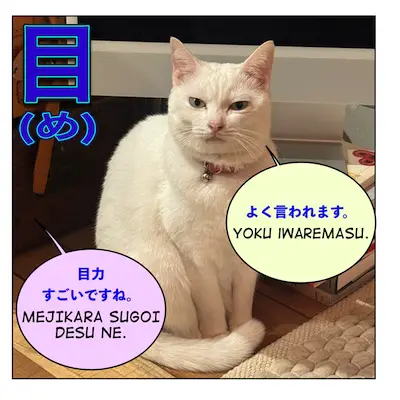
「目力すごいですね。」
= めじからすごいですね。
= Mejikara sugoi desu ne.
= You have such a powerful gaze(expressive eyes).
Mii: よく言われます。
= よくいわれます。
= Yoku iwaremasu.
= I get that a lot.
Hi everyone! I’m your guest teacher for today. Mii.
Let’s continue body expressions and idioms. This is part 3.
In this lesson, we’ll learn 目 (= め = me = ) eye related expressions and idioms including relatively new expressions.
⭐️ 目 = め = me = eye
First of all, let me explain the word 目力 ( = めじから = mejikara) in the picture above.
* 目力がある = めじからがある = mejikara ga aru = to have expressive eyes /piercing eyes, to have a powerful gaze
目 ( = め = me ) = eyes + 力 ( = ちから= chikara) = power/strength
→ (Literal meaning) eye power
You use 目力がある ( = めじからがある = mejikara ga aru)
or 目力がすごい ( = めじからがすごい = mejikara ga sugoi) to describe someone (or even an animal ) whose eyes are especially intense, striking, expressive, or powerful. It is usually meant as a compliment.
* (~に)目がない = (~に)めがない = ( ~ ni) me ga nai = crazy about ~
→(Literal meaning) One has no eyes for anything but ~.
Ex. 私は甘いものに目がない。
= わたしはあまいものにめがない。
= Watashi wa amaimono ni me ga nai.
= I have a sweet tooth. (I love sweets.)
* 目が届く/ 届かない = めがとどく/ とどかない = me ga todoku/todokanai = to keep an eye on / not notice
→(Literal meaning) one’s eyes reach / don’t reach
Ex. 子供達は、親の目の届くところで遊ばせましょう。
= こどもたちは、おやのめのとどくところであそばせましょう。
= Kodomotachi wa, oya no me no todoku tokoro de asobasemashou.
= Let’s let children play where their parents can keep an eye on them.
* 目が離せない = めがはなせない = me ga hanasenai = can’t take one’s eyes off
→(Literal meaning) one can’t separate one’s eyes (from it)
Ex. 決勝戦は最後まで目が離せない。
= けっしょうせんはさいごまでめがはなせない。
= Kesshousen wa saigo made me ga hanasenai.
= You can’t take your eyes off the final match until the end.
Note: You might also see this expression used with 片時も = かたときも= katatoki mo.
* 片時も目が離せない
= かたときもめがはなせない
= Katatoki mo me ga hanasenai
= can’t take one’s eyes off even for a moment
→(Literal meaning) One can’t separate one’s eyes even for a single moment.
Ex. 子犬は片時も目が離せない。
= こいぬはかたときもめがはなせない。
= Koinu wa katatoki mo me ga hanasenai.
= You can’t take your eyes off a puppy even for a moment.
* 目が点になる = めがてんになる = me ga ten ni naru = to be stunned or at a loss for words after seeing or hearing something surprising.
→(Literal meaning) one’s eyes become dots
Note: You might have seen manga characters’ eyes turn into dots when they see or
hear something surprising. Apparently, this expression came from that image.
Ex. 友達が、その会社の社長になったと聞いて、目が点になった。
= ともだちがそのかいしゃのしゃちょうになったときいて、めがてんになった。
= Tomodachi ga sono kaisha no shachou ni natta to kiite, me ga ten ni natta.
= I was stunned when I heard that my friend had become the president of the company.
Additional Note: Let me add one more relatively modern expression with 目が~になる.
* 目がハートになる / 目がハート型になる
= めがハートになる / めがハートがたになる
= Me ga haato ni naru/ Me ga haato gata ni naru.
= to have heart-shaped eyes / to get heart eyes (because you really like or love someone or something)

* 目が眩む = めがくらむ = me ga kuramu = to be dazzled / tempted
→(Literal meaning) One’s eyes become dizzy.
Ex. お金に目がくらんで、変な仕事を引き受けてはいけませんよ。
= おかねにめがくらんで、へんなしごとをひきうけてはいけませんよ。
= Okane ni me ga kurande, henna shigoto wo hikiuketewa ikemasen yo.
= Don’t let money blind you into taking on shady jobs.
* 目が肥える = めがこえる = me ga koeru = to develop a discerning eye
→(Literal meaning) One’s eyes become well-fed.
Ex. 彼女は目が肥えているから、絶対にだまされて偽物を買わされることはないだろう。
= かのじょはめがこえているから、ぜったいにだまされてにせものをかわされることはないだろう。
= Kanojo wa me ga koete iru kara, zettai ni damasarete nisemono wo kawasareru koto wa naidarou.
= She has a discerning eye, so she’ll never be fooled into buying a fake.
📝Related expression
*目の肥やし = めのこやし = me no koyashi = something that enriches one’s eye / a feast for the eyes
→(Literal meaning) fertilizer / nourishment for the eyes
Ex. プロのイラストレーターの作品を見ることができていい目の肥やしになりました。
= プロのイラストレーターのさくひんをみることができていいめのこやしになりました。
= Puro no irasutoreetaa no sakuhin wo miru koto ga dekite ii me no koyashi ni narimashita.
= Being able to see a professional illustrator’s work was a valuable experience that helped develop my eye.
* 見る目がある/ない = みるめがある/ない = miru me ga aru/nai = to have / lack good judgment
→(Literal meaning) to have / not have eyes for seeing
(casual speech)
Ex. 私にはいい男性を見る目がないのかな。いつも変な男にひっかかる。
= わたしにはいいだんせいをみるめがないのかな。いつもへんなおとこにひっかかる。
= Wtashi niwa ii dansei wo miru me ga nai no kana. Itsumo henna otoko ni hikkakaru.
= Maybe I’m not good at judging men. I always end up with the wrong guys.
* 目が回る = めがまわる = me ga mawaru = to feel dizzy
→ (Literal meaning) one’s eyes spin
Ex. なんか目が回ってきた。
= なんかめがまわってきた。
= Nanka me ga mawatte kita.
= I’m starting to feel dizzy.
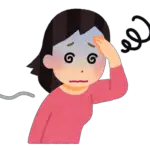
You can use this expression figuratively to describe being extremely busy.
Ex. 今月は目が回る忙しさだった。
= こんげつはめがまわるいそがしさだった。
= Kongetsu wa me ga mawaru isogashisa datta.
= This month has been insanely busy.
* 目が高い = めがたかい = me ga takai = to have good taste / to be discerning
→ (Literal meaning) to have high eyes
Ex. この着物のよさがわかるなんて、目が高いね。
= このきもののよさがわかるなんて、めがたかいね。
= Kono kimono no yosa ga wakarunante, me ga takai ne.
= You really have a good eye if you can appreciate this kimono.
Note: You can add お to make it sound more polite (お目が高い = おめがたかい = ome ga takai ). However, avoid using this expression with someone of higher status because it may
sound as if you’re evaluating their judgment.
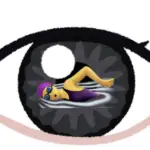
* 目が泳ぐ= めがおよぐ = me ga oyogu = to have shifty eyes / to look nervous and unable to make eye contact
→(Literal meaning) one’s eyes swim
(casual speech)
Ex. なんか隠しているよね。目が泳いでいるよ。
= なんかかくしているよね。めが およいでいるよ。
= Nanka kakushite iru yo ne. Me ga oyoide iru yo.
= You’re hiding something, aren’t you? Your eyes are darting around.
* 目星がつく = めぼしがつく = meboshi ga tsuku = to get a good idea / to have a pretty good idea
→ (Literal meaning) a likely target becomes clear
Ex. 警察は犯人の目星がついていると思う。
= けいさつははんにんのめぼしがついているとおもう。
= Keisatsu wa hannin no meboshi ga tsuite iru to omou.
= I think the police have a pretty good idea who the culprit is.
Note: transitive form 目星をつける = めぼしをつける = meboshi wo tsukeru = to
identify a likely direction / to make a rough plan
Ex. 今の仕事の目星をつけてからでないと遊びに行けない。
= いまのしごとのめぼしをつけてからでないとあそびにいけない。
= Ima no shigoto no meboshi wo tsukete kara de nai to asobi ni ikenai.
= I can’t go out until I have a clear idea of how to handle my current work.
* 目ではない = めではない = me de wa nai/ 目じゃない = めじゃない = me janai = no match for
→(Literal meaning) not an eye / eyes
(casual speech)
Ex. あんな選手、目じゃないよ。僕はもっと上を目指す!
= あんなせんしゅ、めじゃないよ。ぼくはもっとうえをめざす!
= Anna senshu, me janai yo. Boku wa motto ue wo mezasu!
= That player is no match for me. I’m aiming even higher!
* 目を引く = めをひく = me wo hiku = to attract attention, to catch one’s eye
→ (Literal meaning) to pull / draw one’s eyes
Ex. 新宿の3Dの猫の広告は、ひときわ目を引いていた。
= しんじゅくの3D(スリーディー)のねこのこうこくは、ひときわめをひいていた。
= Shinjuku no 3D(surii dii) no neko no koukoku wa, hitokiwa me wo hiiteita.
= The 3D cat advertisement in Shinjuku really stood out.
* 目を光らせる = めをひからせる = me wo hikaraseru = to keep a sharp eye on / to keep a close watch on (to prevent wrongdoing)
→ (Literal meaning) to make one’s eyes shine (glow).
Ex. 試験の間、先生は生徒がカンニングをしないか目を光らせた。
= しけんのあいだ、せんせいはせいとがカンニングをしないかめをひからせた。
= Shiken no aida, sensei wa seito ga kanningu wo shinai ka me wo hikaraseta.
= During the exam, the teacher kept a sharp eye on the students to make sure they didn’t cheat.
* 目を疑う = めをうたがう = me wo utagau = can’t believe one’s eyes
→ (Literal meaning) to doubt one’s eyes
Ex. 高級メロンの値段を見て、一瞬、目を疑った。
= こうきゅうメロンのねだんをみて、いっしゅん、めをうたがった。
= Koukyuu meron no nedan wo mite, isshun, me wo utagatta.
= When I saw the price of the luxury melon, I couldn’t believe my eyes for a moment.
* 目を配る = めをくばる = me wo kubaru = to pay attention
→ (Literal meaning) to distribute one’s eyes
Ex. いい店長は、常にお客さんやスタッフ、店の様子に目を配っている。
= いいてんちょうは、つねにおきゃくさんやスタッフ、みせのようすにめをくばっている。
= ii techou wa, tsuneni okyakusan ya sutaffu, mise no yousu ni me wo kubatte iru.
= A good store manager always keeps an eye on the customers, the staff, and what’s going on in the store / restaurant.
* 目を覚ます = めをさます = me wo samasu = to wake up / to be become aware of something
Ex. 朝、6時に目が覚めた。
= あさ、ろくじにめがさめた。
= Asa, rokuji ni me ga sameta.
= I woke up at 6 a.m.
Ex. あの人に利用されているだけだよ。目を覚まして。
= あのひとにりようされているだけだよ。めをさまして。
= Ano hito ni riyou sarete iru dakedayo. Me wo samashita.
= That person is only using you. Wake up and realize it.
* 目をつける = めをつける = me wo tsukeru = to notice / target
→ (Literal meaning) to put one’s eyes on
Ex. 目をつけていたバッグが売れてしまった。
= めをつけていたバッグがうれてしまった。
= Me wo tsuketeita baggu ga urete shimatta.
= Someone bought the bag I had my eye on.
* 目の付け所 = めのつけどころ = me no tsukedokoro = way of looking at things, what someone focuses on, perspective
→ (Literal meaning) the place where one sets one’s eyes
Ex. 一人暮らしのお年寄り向けにこんなサービスを考えるなんて、目の付け所がいいね。
= ひとりぐらしのおとしよりむけにこんなサービスをかんがえるなんて、めのつけどころがいいね。
= Hitorigurashi no otoshiyori muke ni konna saabisu wo kangaeru nante, me no tsukedokoro ga ii ne.
= Coming up with a service like this for elderly people who live alone ― you’ve got a good eye.
* 目のやり場 = めのやりば = me no yariba = where to look; where to direct one’s eyes
→ (Literal meaning) the place to direct one’s eyes
Casual speech
Ex. 人前であんまりいちゃつかないで。目のやり場に困るから。
= ひとまえであんまりいちゃつかないで。めのやりばにこまるから。
= Hitomae de anmari ichatsuanai de. Me no yariba ni komaru kara.
= Don’t be so lovey-dovey in public. I won’t know where to look.
* 目の保養 = めのほよう = me no hoyou = feast for the eyes
→(Literal meaning) to nourish one’s eyes
Ex. たまには目の保養に宮古島の海にでも行きたいな。
= たまにはめのほようにみやこじまのうみにでもいきたいな。
= Tama ni wa me no hoyou ni Miyakojima no umi ni demo ikitai na.
= I’d like to go to the sea of Miyakojima sometime to enjoy the beautiful scenery.
* 目を養う = めをやしなう = me wo yashinau = to train one’s eye
→ (Literal meaning) to nourish one’s eyes
Ex. 世界遺産の建築物を訪ね回り、目を養った。
= せかいいさんのけんちくぶつをたずねまわり、めをやしなった。
= Sekai isan no kenchikubutsu wo tazunemawari, me wo yashinatta.
= I visited World Heritage buildings around the world and developed my eye for architecture.
* 目を背ける = めをそむける = me wo somukeru = to look away
→ (Literal meaning) to turn one’s eyes away
Ex. 現実から目を背けないで、今できることを考えなくてはいけない。
= げんじつからめをそむけないで、いまできることをかんがえなくてはいけない。
= Genjkitsu kara me wo somukenai de, ima dekiru ko
= We have to face reality and think about what we can do now.
* 目を皿にする = めをさらにする = me wo sara ni suru = to look carefully, to keep one’s eyes peeled
→(Literal meaning) to make one’s eyes into plates
Ex. ピアスを落としてしまい、家中、目を皿のようにして探した。
= ピアスをおとしてしまい、いえじゅう、めをさらのようにしてさがした。
= Piasu wo otoshite shimai, iejuu, me wo sara no you ni shite sagashita.
= I dropped my earring and searched all over the house with my eyes peeled.
* 目を丸くする = めをまるくする = me wo maruku suru = to open one’s eyes wide in surprise / to show surprise at something unexpected
→(Literal meaning) to make one’s eyes round
Ex. 私がラーメンを2杯も食べたら、友達は目を丸くして驚いた。
= わたしがラーメンをにはいもたべたら、ともだちはめをまるくしておどろいた。
= Watashiga raamen wo nihai mo tabetara, tomodachi wa me wo maruku shite odoroita.
= My friend was amazed when I ate two bowls of ramen.
* 目を三角にする = めをさんかくにする = me wo sankaku ni suru = to glare angrily
→(Literal meaning) to make one’s eyes triangular
Ex. 二回続けて約束の時間に遅れたら、姉は目を三角にして怒った。
= にかいつづけてやくそくのじかんにおくれたら、あねはめをさんかくにしておこった。
= Nikai tsuzukete yakusoku no jikan ni okuertara, ane wa me wo sankaku ni shite okotta.
= When I was late for our meeting time twice in a row, my older sister got angry and glared at me.
* 目を細める / 目を細くする = めをほそめる/ めをほそくする = me wo hosomeru / me wo hosoku suru = to smile warmly
→(Literal meaning) to make one’s eyes narrow
Ex. 生まれてから初めて赤ちゃんを実家に連れていくと両親が目を細めてかわいい、かわいいと抱っこをしてくれた。
= うまれてからはじめてあかちゃんをじっかにつれていくとりょうしんがめをほそめてかわいい、かわいいとだっこをしてくれた。
= Umarete kara hajimete akachan wo jikka ni tsurete iku to ryoushinga me wo hosomete kawaii, kawaii to dakko wo shite kureta.
= When I took my baby to my parents’ house for the first time after they were born, my parents smiled warmly, saying, “So cute! So cute!” as they held the baby.
* 目を通す = めをとおす = me wo toosu = to look through / read over
→ (Literal meaning) to pass one’s eyes through
Ex. 明日の会議資料渡しておきますからざっと、目を通しておいてください。
= あしたのかいぎしりょうわたしておきますからざっと、めをとおしておいてください。
= Ashita no kaigi shiryou watashite okimasu kara zatto, me wo tooshite oite kudasai.
= I’ll give you tomorrow’s meeting materials, so please skim through them beforehand.
* 目を盗む = めをぬすむ = me wo nusumu = to do something secretly/behind someone’s back
→(Literal meaning) to steal someone’s eyes
Ex. 親の目を盗んでこっそり夜抜け出して友達に会いに行った。
= おやのめをぬすんでこっそりよるぬけだしてともだちにあいにいった。
= Oya no me wo nusunde kossori yoru nukedashite tomodachi ni aini itta.
= I secretly snuck out at night while my parents weren’t looking and went out to meet my friend.
Similar expression:
* 人目を盗む = ひとめをぬすむ = to do something without being seen
→ (Literal meaning) to steal people’s eyes
Ex. 人目を盗んでデートしていたのに、すぐに友達にばれてしまった。
= ひとめをぬすんでデートしていたのに、すぐにともだちにばれてしまった。
= Hitome wo nusunde deeto shite ita noni, sugu ni tomodachi ni barete
shimatta.
= Even though we were dating secretly without anyone noticing, our friends
figured it out right away.
* 目から鱗が落ちる = めからうろこがおちる = me kara uroko ga ochiru = to have an eye-opening realization
→(Literal meaning) the scales fall from one’s eyes
(Short version: 目から鱗 = めからうろこ= me kara uroko)
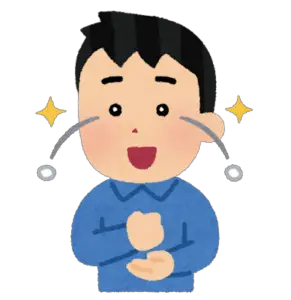
Ex. 重曹で鍋の焦げが落ちるなんて、目から鱗だった。
= じゅうそうでなべのこげがおちるなんて、めからうろこだった。
= Juusou de nabe no koge ga ochiru nante, me kara uroko datta.
= I was amazed that baking soda could remove burnt-on residue from a pot.
* 遠い目をする = とおいめをする = tooi me wo suru = to stare into the distance / to have a faraway look / to look lost in thought
→ (Literal meaning) to make distant eyes.
Ex. 父は、遠い目をして「あの頃はいい時代だったな。」と言った。
= ちちは、とおいめをして「あのころはいいじだいだったな。」といった。
= Chichi wa, tooime wo shite “Ano koro wa ii jidai datta na” to itta.
= My father looked into the distance and said, “Those were the good old days.”
* 長い目で見る = ながいめでみる = nagaime de miru = to take a long-term view
→(Literal meaning) to see with long eyes
Ex. すぐに結果を追い求めず、長い目で見た方がいい。
= すぐにけっかをおいもとめず、ながいめでみたほうがいい。
= Sugu ni kekka wo oimotomezu, nagaime de mita hou ga ii.
= Don’t expect immediate results, and you should take a long-term view.
* 目もくれない = めもくれない = me mo kurenai = to show no interest
→ (Literal meaning) to not even give one’s eyes
Ex. 子供は、小さい頃ゲームがあんなに好きだったのに、今では目もくれず勉強ばかりしている。
= こどもは、ちいさいころゲームがあんなにすきだったのに、いまではめもくれずべんきょうばかりしている。
= Kodomo wa, chiisai koro geemu ga annani suki datta noni, ima dewa me mo kurezu benkyou bakari shiteiru.
= My child used to love video games when they were little, but now they don’t even look at them and just study.
* 目も当てられない = めもあてられない = me mo aterarenai = unbearable to watch
→ (Literal meaning) to not be able to even look at
Ex. 自分で髪を切ったら、目も当てられない仕上がりになってしまった。
= じぶんでかみをきったら、めもあてられないしあがりになってしまった。
= Jibun de kami wo kittara, me mo aterarenai shiagari ni natte shimatta.
= I cut my own hair, and the result was a complete disaster.
* 目にする = めにする = me ni suru = to see / notice
→(Literal meaning) to put something into one’s eyes
Ex. 夏になると、内側にファンのついたベストを着ている人を目にすることが多くなった。
= なつになると、うちがわにファンのついたベストをきているひとをめにすることがおおくなった。
= Natsu ni naru to, uchigawa ni fan no tsuita besuto wo kiteiru hito wo me ni suru koto ga ooku natta.
= We see more people wearing fan-powered cooling vests in the summer.
* 大目に見る = おおめにみる = oome ni miru = to be lenient; to purposely overlook something
→(Literal meaning) to see with big eyes.
Ex. 母:「動画ばかり見てないで勉強しなさい!」
= はは:「どうがばかりみてないでべんきょうしなさい!」
= Haha: Douga bakari mitenai de benkyou shinasai!
= Mom: Stop watching videos all the time and study!
息子:「お母さん、試験が終わったばかりなんだから大目に見てよ。」
= むすこ:「おかあさん、しけんがおわったばかりなんだからおおめにみてよ。」
= Musuko: Okaasan, shiken ga owatta bakari nandakara oome ni mite yo.
= Son: Mom, I just finished my exams, so please let it slide this time.
* 目に入れても痛くない / 目の中に入れても痛くない
= めにいれてもいたくない / めのなかにいれてもいたくない
= Me ni iretemo itaku nai/ Me no naka ni iretemo itaku nai.
= the apple of one’s eye / to love someone dearly (You often use it with your child, grandchild, pets, etc.)
→(Literal meaning) It doesn’t hurt even if you put someone in your eye.
Ex. マギーは、私にとって目に入れても痛くないほどかわいい存在です。
= マギーは、わたしにとってめにいれてもいたくないほどかわいいそんざいです。
= Maggie wa, watashi ni totte me ni irete mo itaku nai hodo kawaii sonzai desu.
→(Literal meaning) = Maggie is so adorable that I could put her in my eye and it wouldn’t hurt.
= Maggie is so precious to me that I would do anything for her.
* 目頭が熱くなる = めがしらがあつくなる = Megashiraga atsuku naru = to be moved to tears
→(Literal meaning) the inner corners of one’s eyes become hot
Ex. 子供の卒業式のスピーチを聞いて目頭が熱くなった。
= こどものそつぎょうしきのスピーチをきいてめがしらがあつくなった。
= Kodomo no sotsugyoushiki no supiichi wo kiite megashira ga atsuku natta.
= I felt tears welling up when I heard my child’s graduation speech.
🔹目玉 = めだま = medama = eyeballs
* 目/目玉が飛び出るほど高い
= め/めだまがとびでるほどたかい
= Me/Medama ga tobideru hodo takai
= eye-popping price/ It costs an arm and a leg.
→(Literal meaning) so expensive that your eyes/eyeballs pop out

* 大目玉を食らう (食う) = おおめだまをくらう(くう) = oomedama wo kurau (kuu)
= to get a serious scolding/to get chewed out (from someone older or in a higher position)
→(Literal meaning) to get big eyeballs
It comes from the image of an angry person’s wide-open eyes.
Ex. 母親の白い服にコーヒーをこぼしてしまい大目玉を食った。
= ははおやのしろいふくにコーヒーをこぼしてしまい、おおめだまをくった。
= Hahaoya no shiroi fuku ni koohii wo koboshite shimai, oomedama wo kutta.
= I spilled coffee on my mother’s white clothes and got chewed out.
******
 マギー先生より = マギーせんせいより = From Maggie Sensei
ミイ先生は、可愛くて目の保養になりましたよ。ありがとう!
=ミイせんせいは、かわいくてめのほようになりましたよ。ありがとう!
= Mii Sensei wa, kawaikute me no hoyou ni narimashita yo. Arigatou!
= Mii-Sensei, you are so cute and such a feast for the eyes. Thank you!
****
My Patrons can access the audio file
Audio Files for this lesson →Click here
PDF file without ads (One with romaji & One without romaji) →Click here
I appreciate your support! サポートありがとう! !
My supporters can access tons of audio files, PDF files, and special lessons on my Patreon page.
❤️ありがとう x 2: Mini lessons, PDF files with audio for all the lessons here from 2018
❤️ありがとう x 5 In addition to the previous benefit + Daily Japanese
Check the index of Daily Japanese Series →Index
❤️ありがとう x 10 In addition to the previous benefit + PDF file of all my Twitter lessons for a month (average 10 ~ 18 pages) with an audio file. Please check the details here
One-time support ↓ ありがとう!