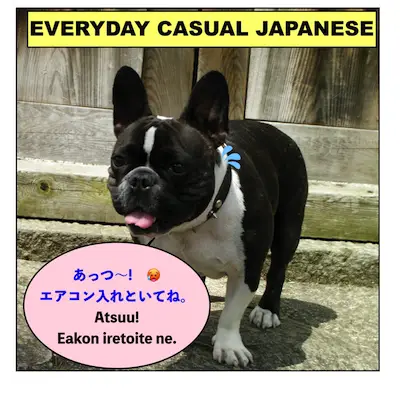
「あっつ〜! エアコン入れといてね。」
= あっつ〜! エアコンいれといてね。
= Attsuu! Eakon iretoite ne.
= It’s so hoooot! Be sure to turn on the A/C for me, OK?
Hi everyone!
I have made many casual Japanese lessons in the past, and today I’d like to put compile those expressions together in one lesson. Most of the grammar patterns and expressions here are considered grammatically incorrect or inappropriate in formal writing or essays. So be careful! This lesson is NOT for preparing for the JLPT or school exams. However, as I always say, even though learning formal or textbook Japanese is great and necessary for true fluency — it’s also fun to see how people ACTUALLY speak in everyday life. Also, the words and expressions I’m sharing today aren’t trendy slang that change quickly — they’re natural, everyday expressions that native speakers actually use!
⭐️Casual Grammar patterns:
Now, let’s go through some casual grammar patterns. I’ll go over the basic patterns with a few example sentences, and include links to more detailed lessons for each topic.
🔹Verb ている/~でいる ( = te iru / de iru) : Doing something/ have been doing (habitual actions)/ Describing a current state.
→Casual form: Drop い ( = i) → Verb てる / でる ( = teru/deru)
Since the い is dropped, this is called い抜き言葉(いぬきことば = inuki kotoba ), literally “i-removed word,” or the “i-dropping” form.
Ex. この漢字の読み方、知っている?
= このかんじのよみかた、しっている?
= Kono kanji no yomikata, shitteiru?
= Do you know how to read this kanji?
→(casual) この漢字の読み方、知ってる?
= このかんじのよみかた、しってる?
= Kono kanji no yomikata, shitteru?
Ex. 元気にしていますか?
= げんきにしていますか?
= How are you doing?
→(casual) 元気にして る?
→(more casual) 元気にしてる?
Ex. 健康のために、毎日、野菜ジュースを飲んでいるよ。
= けんこうのために、まいにち、やさいジュースをのんでいる。
= I drink vegetable juice every day for my health, you know.
→(casual) 健康のために、毎日、野菜ジュースを飲んでるよ。
= けんこうのために、まいにち、やさいジュースをのんでるよ。
Ex. この店は夜の11時まで開いている。
= このみせはよるの11じまであいている。
= This shop/restaurant/place is open until 11 p.m.
→ (casual) この店は夜の11時まで開いてる。
= このみせはよるの11じまであいてる。
=Kono mise wa yoru no juuichiji made aiteru.
Ex. もう1週間も彼女と話していない。
=もういっしゅうかんもかのじょとはなしていない。
= Mou isshuukan mo kanojo to hanashite inai.
= I haven’t talked to my girlfriend for a week.
→(casual)もう1週間も彼女と話してない。
= もういっしゅうかんもかのじょとはなしてない。
= Mou isshuukan mo kanojo to hanashitenai.
Ex. 荷物を見ていてくれますか?
= にもつをみていてくれますか?
= Nimotsu wo miteite kuremasu ka?
= Could you keep an eye on my bags?
→(casual) 荷物見ててくれる?
= にもつみててくれる?
= Nimotsu mitete kureru?
Ex. こちらで待っていてくださいね。
= こちらでまっていてくださいね。
= Please wait here, OK?
→(casual) ここで待っててね。
= ここでまっててね。
= Koko de mattete ne.
🔹 Verbている ( = te iru ) / でいる ( = de iru) + の ( = no) /です ( = desu ) (+か ( = ka) ): to state or emphasize what someone is doing / has been doing (habitually) / to describe a current state / to ask what someone is doing.
→ Casual form: Drop い and change る ( = ru) to ん ( = n)
Verbている ( = te iru)
→ (drop い ( = i) )
→てる ( = teru)
→ 〜てん ( = ten) + の ( = no) /です ( = desu ) (+か (= ka))
Verbでいる ( = de iru)
→ (drop い( = i)) →でる ( = deru ) → 〜でん ( = den) + の ( – no) /です ( = desu) (+か ( = ka))
Ex. 週末はいつも何をしているの?
= しゅうまつはいつもなにをしているの?
= Shuumatsu wa itsumo nani wo shite iru no?
= What do you usually do on weekends?
→(casual) 週末はいつも何してんの?
= しゅうまつはいつもなにしてんの?
= Shuumatsu wa itsumo nani shitenno?
(Note: In casual conversation, particles like を are often omitted.)
Ex. 何を飲んでいるのですか?
= なにをのんでいるのですか?
= Nani wo nonde iru no deus ka?
= What are you drinking?
→(casual) 何、飲んでんの?
= なに、のんでんの?
= Nani, nondenno?
Ex. お金に困っているのだったら少し貸すよ。
= おかねにこまっているのだったらすこしかすよ。
= Okane ni komatte iru no dattara sukoshi kasu yo.
= If you’re having trouble with money, I’ll lend you some, you know.
→(casual) お金に困ってるんだったら少し貸すよ。
= おかねにこまってるんだったらすこしかすよ。
= Okane ni komatterundattara sukoshi kasu yo.
Related Lesson:
How to use 〜ている ( = te iru)
Link: Click here
🔹Verb (te-form) ておく( = te oku) :to do something in advance, in preparation / have something ready for later/to do something and leave it as is.
→ Casual form: とく ( = toku)
Ex. 出かける前にご飯を炊いておきますね。
= でかけるまえにごはんをたいておきますね。
= Dekakeru mae ni gohan wo taite okimasu ne.
= I’ll cook rice before going out.
→(casual) 出かける前にご飯炊いとくね。
= でかけるまえにごはんたいとくね。
= Dekakeru mae ni gohan taitoku ne.
Ex. 洗剤を買っておいて (ください)。
= せんざいをかっておいて(ください)。
= Senzai wo katte oite (kudasai).
= Buy some detergent, please.
→(casual) 洗剤、買っといて。
= せんざい、かっといて。
= Senzai, kattoite.
Ex. 考えておきます。
= かんがえておきます。
= Kangaete okimasu.
= I’ll think about it.
→(casual) 考えとく。
= かんがえとく。
= Kangaetoku.
Ex. マギーにあったらよろしく言っておいてください。
= マギーにあったらよろしくいっておいてください。
= Maggie ni attara yoroshiku itteoite kudasai.
= When you see Maggie, tell her hello from me.
→(casual) マギーにあったらよろしく言っといて
= マギーにあったらよろしくいっといて。
= Maggie ni attara yoroshiku ittoite.
= When you see Maggie, tell her hello from me.
Related Lesson:
Casual Contraction: ている ( = teiru)
→てん ( = ten), ておく( = teoku) →とく ( = toku)
Link : Click here.
🔹 は ( =wa) (topic marker): to introduce or bring up a topic / to ask about something. → Casual form: って ( = tte)
Ex. これはどうやって食べたらいいのですか?
= これはどうやってたべたらいいのですか?
= Kore wa douyatte tabetara ii no desu ka?
= How can I eat this?
→(casual) これってどうやって食べたらいいの?
= これってどうやってたべたらいいの?
= Korette douyatte tabetara ii no?
Ex. 明日は、何時に集まりますか?
= あしたは、なんじにあつまりますか?
= Ashita wa, nanji ni atsumarimasu ka?
= What time should we get together tomorrow?
→(casual) 明日って、何時に集まるの?
= あしたって、なんじにあつまるの?
= Asahitatte, nanji ni atsumaru no?
Ex. あの話はどうなりましたか?
= あのはなしはどうなりましたか?
= Ano hanashi wa dou narimashita ka?
= What happened with that matter?
→(casual) あの話ってどうなった?
= あのはなしってどうなった?
= Ano hanashitte dou natta?
🔹と ( = to ) = quoting marker : to quote or report what someone said / to explain something.
→ Casual form: って ( = tte)
Ex. マギー先生が明日は試験だと言っていましたよ。
= マギーせんせいがあしたはしけんだといっていましたよ。
= Maggie Sensei ga ashita wa shiken dato itte imashita yo.
= Maggie Sensei said that there’s a test tomorrow.
→ (more casual) マギー先生が明日は試験だって(言ってたよ)
= マギーせんせいがあしたはしけんだって(いってたよ)。
Ex. 青木さんがよろしくと言っていました。
= あおきさんがよろしくといっていました。
= Aoki san ga yoroshikui to itte imashita.
= Aoki-san says hello to you.
→(casual)青木さんがよろしくって
= あおきさんがよろしくって。
= Aoki san ga yoroshikutte.
Related Lesson: Direct & Indirect speech &って ( = tte)
Lesson Link : Click here
🔹Verb てしまう ( = te shimau) : to finish doing something (to complete an action) / to end up doing something / to do something by accident.
→ Casual form: ちゃう ( = chau)
(Note: Past tense 〜てしまった ( = teshimatta)
→ Casual form ちゃった ( = chatta) )
Ex. 電車がもう行ってしまった。
= でんしゃがもういってしまった。
= Densha ga mou itte shimatta.
= The train has already left.
→(casual)電車がもう行っちゃった。
= でんしゃがもういっちゃった。
= Densha ga mou icchatta.
Ex. あんなに大きいおにぎりをもう食べてしまったの?
= あんなにおおきいおにぎりをもうたべてしまったの?
= Anna ni ookii onigiri wo mou tabete shimatta no?
= Did you already eat such a big rice ball?
→ (casual) あんなに大きいおにぎり、もう食べちゃったの?
= あんなにおおきいおにぎり、もうたべちゃったの?
= Annna ni ookii onigiri, mou tabechatta no?
Ex. お母さん、宿題もうやってしまったから遊びに行ってもいい?
= おかあさん、しゅくだいもうやってしまったからあそびにいってもいい?
= Okaasan, shukudai mou yatte shimatta kara asobini itte mo ii?
= Mom, I’ve already finished my homework, so is it okay if I go out to play?
→(casual) お母さん、宿題もうやっちゃったから遊びに行ってもいい?
= おかあさん、しゅくだいもうやっちゃったからあそびにいってもいい?
= Okaasan, shukudai mou yacchatta kara asobini itte mo ii?
Ex. 携帯を落としてしまった。
= けいたいをおとしてしまった。
= Keitai wo otoshite shimatta.
= I dropped my cellphone by accident.
→(casual)携帯を落としちゃった。
= けいたいをおとしちゃった。
= Keitai wo otoshichatta.
🔹Verb なくてはいけない ( = nakute wa ikenai) / なくてはならない ( = nakutewa naranai) : have to do something/must do something
→Casual verb くちゃ ( = kucha) / きゃ ( = kya) + いけない ( = ikenai) /ならない ( = naranai)
Ex. もう行かなくてはいけません。/ もう行かなければいけません。
= もういかなくてはいけません。/ もういかなければいけません。
= Mou ikanakute wa ikemasen. / Mou ikanakuereba ikemasen.
= I have to go now.
→ (casual)もう行かなくちゃ / もう行かなきゃ
= もういかなくちゃ / もういかなきゃ
= Mou ikanakucha/ Mou ikanakya
= I have to go now.
🔹Verb ては ( = tewa) + いけない ( = ikenai) / いけません ( = ikemasen) / (casual) だめ ( = dame) : (to tell someone not to do something / Don’t do something)
→ Casual form: ちゃ ( = cha) + いけない ( = ikenai) /いけません ( = ikemasen ) / (casual) だめ ( = dame)
Ex. あまり甘いものばかり食べてはいけないよ。
= あまりあまいものばかりたべてはいけないよ。
= Amari amai mono bakari tabete wa ikenai yo.
= You shouldn’t eat too many sweet things.
→ (casual) あまり甘いものばかり食べちゃいけないよ。
= あまりあまいものばかりたべちゃいけないよ。
= Amari amaimono bakari tabecha ikenai yo.
Ex. なにがあっても笑ってはだめだよ。
= なにがあってもわらってはだめだよ。
= Nani ga attemo warattewa dame dayo.
= No matter what happens, don’t laugh.
→ (casual)なにがあっても笑っちゃだめだよ。
= なにがあってもわらっちゃだめだよ。
= Nani ga attemo waraccha damedayo.
Related Lesson:
なきゃ & なくちゃ ( = nakya & nakucha)
Link: Click here
🔹ところ = tokoro = a place/ just did something / about to do something
→(casual) とこ = toko
Ex. その店なら次の信号を右に曲がったところにあるよ。
= そのみせならつぎのしんごうをみぎにまがったところにあるよ。
= Sono mise nara tsugi no shingou wo migi ni magatta tokoro ni aru yo.
= That shop is just past the next traffic light on the right.
→(casual) その店なら次の信号を右に曲がったとこにあるよ。
= そのみせならつぎのしんごうをみぎにまがったとこにある
= Sono mise nara tsugi no shingou wo migi ni magatta toko ni aru yo.
Ex. 代官山ってどんなところ?
= だいかんやまってどんなところ?
= Daikanyama tte donna tokoro?
= What kind of place is Daikanyama?
→(casual) 代官山ってどんなとこ?
= だいかんやまってどんなとこ?
= Daikanyama tte donna toko?
Ex. A is watching a TV drama
A: 「そのドラマ面白い?」
= そのドラマおもしろい?
= Sono dorama omoshiroi?
= Is that drama interesting?
B: 「いま、いいところだから話しかけないで。」
= いま、いいところだからはなしかけないで。
= Ima, ii tokoro dakara hanashikakenai de.
= This is a good part now, so don’t talk to me?
→(casual) B: 「いま、いいとこだから話しかけないで。」
= いま、いいとこだからはなしかけないで。
= Ima, ii toko dakara hanashikakenai de.
= This is a good part now, so don’t talk to me?
Ex. 今、来たところです。
= いま、きたところです。
= Ima, kita tokoro desu.
= I just got here.
→(casual) 今、来たとこ。
= いま、きたとこ。
= Ima, kita toko.
Related Lesson:
How to use ところ = tokoro
Link : Click here
🔹ばかり = bakari = just do something / only someone / something
→(casual) ばっか = bakka
Ex. マギーばかり食べてずるい。
= マギーばかりたべてずるい。
= Maggie bakari tabete zurui.
= It’s unfair that only Maggie gets to eat.
→(casual) マギーばっか食べてずるい。
= マギーばっかたべてずるい。
= Maggie bakka tabete zurui.
Ex. お肉ばかり食べていないで野菜も食べなさい。
= おにくばかりたべていないでやさいもたべなさい。
= Oniku bakari tabete inai de yasai mo tabenasai.
= Don’t just eat meat; eat some vegetables too.
→(casual) お肉ばっか食べていないで野菜も食べなさい。
= おにくばっかたべていないでやさいもたべなさい。
= Oniku bakka tabete inai de yasai mo tabenasai.
Ex. 仕事ばかりの人生はつまらないよ。
= しごとばかりのじんせいはつまらないよ。
= Shigoto bakari no jinsei wa tsumaranai yo.
= A life that’s only work is boring.
→(casual) 仕事ばっかの人生はつまらないよ。
= しごとばっかのじんせいはつまらないよ。
= Shigoto bakka no jinsei wa tsumaranai yo.
Ex. おしゃべりばかりしていないで勉強しなさい。
= おしゃべりばかりしていないでべんきょうしなさい。
= Oshaberi bakari shiteinai de benkyou shinasai.
= Stop just chatting and study.
→(casual) おしゃべりばっかしていないで勉強しなさい。
= おしゃべりばっかしていないでべんきょうしなさい。
= Oshaberi bakka shiteinai de benkyou shinasai.
Related Lesson : How to use ばかり
Link: Click here
🔹 (noun + の ( = no) ) / verb ~た ( = ta) + まま ( = mama) : to leave something as it is / to keep a state unchanged / the way something or someone is
→ Casual form: (noun + の (= no) ) / verb ~た ( = ta) + まんま ( = manma)
Ex. エアコンをつけたまま家を出てきてしまった。
= エアコンをつけたままいえをでてきてしまった。
= Eakon wo tsuketa mama ie wo detekite shimatta.
= I left the air conditioner on when I left the house.
→ (casual) エアコンをつけたまんま家を出てきてしまった。
= エアコンをつけたまんまいえをでてきてしまった。
= Eakon wo tsuketa manma ie wo detekite shimatta.
= I left the air conditioner on when I left the house.
Ex. 久しぶりに元カノと会ったらあの頃のままだった。
= ひさしぶりにもとカノとあったらあのころのままだった。
= Hisashiburi ni motokano to attara anokoro no mama datta.
= When I met my ex-girlfriend for the first time in a while, she was just the same as back then.
→ (casual) 久しぶりに元カノと会ったらあのころのまんまだった。
= ひさしぶりにもとカノとあったらあのころのまんまだった。
= Hisashiburi ni motokano to attara anokoro no manma datta.
Related Lesson: How to use まま = mama
Link: Click here
Now, let me introduce some common casual words and expression patterns.
⭐️Casual Words
* いろいろな = iroirona = various / many kinds of
→(Casual) Replacing い ( = i) with ん ( = n) →いろんな( = ironna)
Ex. いろいろなお菓子がありますね。
= いろいろなおかしがありますね。
= Iroirona okashi ga arimasu ne.
= There are many different kinds of snacks, aren’t they?
→(casual) いろんなお菓子があるね。
= いろんなおかしがあるね。
= Ironna okashi ga aru ne.
* Someone のうち = no uchi = someone’s house / home / family
→(casual) someone + んち ( = nchi)
Ex. 明日、マギーのうちに行きますよ。
= あした、マギーのうちにいきますよ。
= Ashita, Maggie no uchi ni ikimasu yo.
= I am going to Maggie’s house tomorrow.
→(casual) 明日、マギーんちに行くよ。
= あした、マギーんちにいくよ。
= Ashita, Maggie-nchi iku yo.
= I’m going to Maggie’s house tomorrow.
Ex. 彼のうちは、ちょっと変わっているからね。
= かれのうちは、ちょっとかわっているからね。
= Kare no uchi wa, chotto kawatteiru karane.
= His family / home is a little unusual, you know.
→(casual) 彼んちは、ちょっと変わっているからね。
= かれんちは、ちょっとかわっているからね。
= Karenchi wa, chotto kawatte iru karane.
🔸少し = すこし = sukoshi = a little (more formal: 少々 = しょうしょう= shoushou )
→(casual) ちょっと = chotto
Ex. 少々お待ちください。
= しょうしょうおまちください。
= Shoushou omachi kudasai.
= Please wait a moment.
→(casual) ちょっと待って。
= ちょっとまって。
= Chotto matte.
= Wait a moment.
Ex. 少し暑いのでエアコンをつけてくれますか?
= すこしあついのでエアコンをつけてくれますか?
= Sukoshi atsui node eakon wo tsukete kuremasu ka?
= It’s a little hot, so could you turn on the air conditioner?
→ (casual) ちょっと暑いのでエアコンをつけてくれる?
= ちょっとあついのでエアコンをつけてくれる?
= Chotto atsui node eakon wo tsuktete kureru?
= It’s a bit hot, so can you turn on the air conditioner?
Note: ちょっと ( = chotto) has many other usages.
It can mean “a little,” soften requests, express a subtle or vague refusal, or make expressions sound less direct.
Related lesson: ちょっと = chotto
Link: Click here
🔸けれども = keredomo = but / however
→(casual) けど = kedo
Ex. このお肉、高いけれども美味しいですね。
= このおにく、たかいけれどもおいしいですね。
= Kono oniku, takai keredomo oishii desu ne.
= This meat is expensive, but it’s delicious.
→(casual) このお肉、高いけど美味しいね。
= このおにく、たかいけどおいしいね。
= Kono oniku, takai kedo oishii ne.
🔸Demonstratives
★どちら = dochira = which one / which way
→(casual) どっち = docchi
★ここ = koko = here / これ = kore = this one (polite: こちら)
→(casual) こっち = kocchi = here , this one
Ex. どちらがいいですか? / どちらが好きですか?
= どちらがいいですか? / どちらがすきですか?
= Dochiga ga ii desu ka? / Dochira ga suki desu ka?
= Which one do you like better?
→(casual) どっちがいい? / どっちが好き?
= どっちがいい? / どっちがすき?
= Docchi ga ii? / Docchi ga suki?
= Which one do you like better?
★そこ = soko = there / そちら = sochira (polite) = there / that one / that person →(Casual) そっち = socchi
Ex. 今、そちらに向かっています。
= いま、そちらにむかっています。
= Ima, sochira ni mukatte imasu.
= I’m on my way.
→(casual) 今、そっちに向かってます。
= いま、そっちにむかってます。
= Ima, socchi ni mukatte imasu.
= I’m on my way.
★あそこ = asoko = over there
→(casual) あっち = acchi
Ex. あっちに行って!
= あっちにいって!
= Acchi ni itte!
= Go over there!/ Get out of here.
Related Lesson: こそあど言葉 = こそあどことば = Kosoado kotoba
Link: Click here
🔸やっぱり = yappari = as I thought / on second thought
→(casual) やっぱ = yappa
Ex. やっぱり、夏は、キンキンに冷えたビールに限りますね。
= やっぱり、なつは、キンキンにひえたビールにかぎりますね。
= Yappari, natsu wa, kinkin ni hieta biiru ni kagirimasu ne.
= Nothing beats an ice-cold beer in summer.
→(casual) やっぱ、夏は、キンキンに冷えたビールに限るね。
= やっぱ、なつは、キンキンにひえたビールにかぎるね。
= Yappa, natsu wa, kinkin ni hieta biiru ni kagiru ne.
Related Lesson: やっぱり = yappari
Link: Click here
🔸きちんと = kichinto = properly / to do things right
→(casual) ちゃんと = chanto
Ex. きちんと、食べなさい。
= きちんと、たべなさい。
= Kichinto, tabenasai.
= Eat properly.
→(casual) ちゃんと、食べなさい。
= ちゃんと、たべなさい。
= Chanto, tabenasai.
🔸では = dewa = then / with / by something / in that case/ See you/ well
→(casual) じゃあ / じゃ = jaa / ja
Ex. では、また (会いましょう)。
= では、また (あいましょう)。
= Dewa, mata (aimashou).
= I’ll see you.
→(casual) じゃあまた / じゃまたね。
= jaa mata/ ja mata ne
= See you!
* では = dewa = under or with a certain condition (negative context)
Ex. この雨では自転車で帰れない。
= このあめではじてんしゃでかえれない。
= Kono ame dewa jitensha de kaerenai.
= I can’t ride my bike in this rain.
→(casual) この雨じゃ自転車で帰れない。
= このあめじゃじてんしゃでかえれない。
= Kono ame ja jitensha de kaerenai.
Ex. そんな説明ではわからない。
= そんなせつめいではわからない。
= Sonna setsumei dewa wakaranai.
= I don’t understand with an explanation like that.
→(casual) そんな説明じゃわからない。
= そんなせつめいじゃわからない。
= Sonna setsumei ja wakaranai
Related Lesson: Click here
🔸Using the small っ( = tsu) with adverbs and i-adjectives
Small っ ( = tsu) – Emphasizing feelings “very”
Adverbs:
* とても = totemo = very
→ (casual) とっても ( = tottemo)
* すごく = sugoku = very / extremely
→(casual) すっごく = suggoku
* めちゃくちゃ = mechakucha = very / extremely / super
→(casual) めっちゃくちゃ = mecchakucha
→(more casual) めっちゃ = meccha
Ex. すっごくおいしい!
= Suggoku oishii
= This is super delicious!
Ex. 最近、めっちゃ忙しい。
= さいきん、めっちゃいそがしい。
= Saikin, meccha isogashii.
= I’ve been super busy lately.
* i-adjectives
* 小さい = ちいさい = chiisai = small
→(casual) ちっちゃい = chicchai
* 暖かい = あたたかい = atatakai = warm
→(casual)あったかい = attakai
* 大きい = おおきい = ookii = big / large
→(casual) おっきい = Okkii
Drop the い and attach a small っ ( = tsu) at the end, or insert っ ( = tsu) inside the word to make it sound more expressive. This is very common in everyday conversation, especially among young people.
* 安い = やすい = yasui = cheap
→(casual) やすっ / やっす = yasuh/ yassu
* すごい = sugoi = amazing / awesome/ great
→(casual) すごっ = sugoh / すっご = suggo
Note: You can also stretch the vowel sound to show excitement or for emphasis.
→(casual) すごーい! / すご〜い! = Sugoooi! = Amazing! / Awesome! (stretched for excitement)
Ex. かっわいい〜!/ かわい〜! = Kawwaiii! / Kawaiii! = Cuuute! / How cute!
Adjective 〜かしい ( = kashii) : In more casual Japanese among young people, you omit かし ( = kashi)
〜かしい ( = kashii) →〜い ( = i)
Or replace い ( = i) with small っ ( = tsu)
* 恥ずかしい = はずかしい = hazukashii = embarrassing
→(casual) はずい = hazui / はずっ = hazuh
* 難しい = むずかしい = muzukashii = difficult / hard / so difficult!
→(casual) むずい = muzui /むずっ= muzuh
🔸全然 = ぜんぜん = zenzen = at all
→(casual) totally, really
You might have learned the word 全然 = ぜんぜん ( = zenzen ) is used when you negate something completely.
Ex. この薬は全然効かない。
= このくすりはぜんぜんきかない。
= Kono kusuri wa zenzen kikanai.
= This medicine doesn’t work at all.
Ex. 日本語の文法が全然わからない。
= にほんごのぶんぽうがぜんぜんわからない。
= Nihongo no bunpou ga zenzen wakaranai.
= I don’t understand Japanese grammar at all.
Ex. 昨日の試験は全然できなかった。
= きのうのしけんはぜんぜんできなかった。
= Kinou no shiken wa zenzen dekinakatta.
= I couldn’t do yesterday’s exam at all.
Ex. 費用のことは全然気にしないでください。
= ひようのことはぜんぜんきにしないでください。
= Hiyou no koto wa zenzen ki ni shinai de kudasai.
= Don’t worry about the cost at all.
Ex. ご心配は全然いりません。
= ごしんぱいはぜんぜんいりません
= Goshinpai wa zenzen irimasen
= There’s absolutely no need to worry.
(More conversational)
⬇️
People often use 全然 = ぜんぜん to emphasize something in a positive way, like “totally” or “really” in conversation.
Ex. A: 「荷物重くない?」
= にもつおもくない?
= Nimotsu omokunai?
= Isn’t the luggage heavy?
B: 「全然大丈夫!」
= ぜんぜんだいじょうぶ!
= Zenzen daijoubu!
= Totally fine!
Ex. A: 「前髪切りすぎた…」
= まえがみきりすぎた…
= Maegami kirisugita.
= I cut my bangs too short…
B: 「なんで?全然いいよ。」
= なんで?ぜんぜんいいよ。
= Nande? Zenzen ii yo.
= Why? It looks totally fine.
Ex. A: 「この服似合うかな?」
= このふくにあうかな?
= Kono fuku niau kana?
= Does this outfit look good on me?
B: 「全然似合うよ!」
= ぜんぜんにあうよ!
= Zenzen niau yo.
= It looks really good on you!
Related Lesson:
How to use 全く & 全然 = まったく & ぜんぜん = mattaku & zenzen
Link: Click here
🔹普通 = ふつう = futsuu
普通 = ふつう ( = futsuu) means “normal / standard / usual”
→普通に = ふつうに ( = futsuu ni) normally / in a usual way / just…
However, in casual Japanese — especially among young people — 普通に = ふつうに = futsuu ni can also mean: actually, surprisingly, honestly, not that bad, better than expected.
It’s often used to express that something is better (or stronger) than expected, which can sound confusing even for Japanese people.
For example, you might hear young people say:
Ex. 普通に美味しい。
= ふつうにおいしい。
= Futsuu ni oishii.
= It’s pretty tasty. / It’s actually good. (better than expected)
You might wonder whether it’s a compliment or not.
It really depends on the speaker.
It’s usually used when someone didn’t expect the food to be that good, but actually finds it tasty.
So be careful when you say that.
It’s best to avoid using it with someone who is treating you to a meal or has cooked for you.
Ex. あの状況で勝つなんて普通にすごいよね。
= あのじょうきょうでかつなんてふつうにすごいよね。
= Ano jouyou de katsunante futsuu ni sugoiyone.
= Winning in that situation is actually amazing, right?.
***
 マギー先生より = マギーせんせいより = Maggie Sensei yori = From Maggie Sensei
このレッスン、普通に面白かった?
= このレッスン、ふつうにおもしろかった?
= Kono ressun, futsuu ni omoshirokatta?
= Was this lesson not too bad?
じゃあ、また次のレッスンで会おうね!
= じゃあ、またつぎのレッスンであおうね!
= Jaa, mata tsugi no ressun de aoune!
= Alright, see you in the next lesson!
****
My Patrons can access the audio file
Audio Files for this lesson →Click here
PDF file without ads (One with romaji & One without romaji) →Click here
I appreciate your support! サポートありがとう! !
My supporters can access tons of audio files, PDF files, and special lessons on my Patreon page.
❤️ありがとう x 2: Mini lessons, PDF files with audio for all the lessons here from 2018
❤️ありがとう x 5 In addition to the previous benefit + Daily Japanese
Check the index of Daily Japanese Series →Index
❤️ありがとう x 10 In addition to the previous benefit + PDF file of all my Twitter lessons for a month (average 10 ~ 18 pages) with an audio file. Please check the details here
One-time support ↓ ありがとう!